Press Releases

Clear
  • Bioprocess engineering / 2021

    Top-speed antibody development

    Research News / February 01, 2021

    Researchers at Fraunhofer ITEM following preparation of doses of a monoclonal antibody. This was produced using an innovative cell pool method, which substantially shortens the time to clinical trials.
    © Fraunhofer ITEM/Holger Ziehr

    The development of biopharmaceuticals is a long and expensive process. A decade or more can elapse between the discovery of a new protein-based active ingredient and the release of a new drug. One major hurdle on this journey is the passage from the lab to clinical trials. As a rule, it takes between 18 months and two years to produce this kind of investigational medicinal product for use in clinical trials. However, at the Fraunhofer Institute for Toxicology and Experimental Medicine ITEM, researchers from the Division of Pharmaceutical Biotechnology have now developed a production method that reduces this step to just six months.

    more info
  • Water hygiene / 2021

    Water disinfection with ozone

    Research News / February 01, 2021

    The electrodes for the ozone generator are made of silicon wafers with precisely etched trenches.
    © Fraunhofer ISIT

    While chlorine and ultraviolet light are the standard means of disinfecting water, ozone is equally effective in killing germs. To date, ozone has only been used as an oxidation agent for treating water in large plants. Now, however, a project consortium from Schleswig-Holstein is developing a miniaturized ozone generator for use in smaller applications such as water dispensers or small domestic appliances. The Fraunhofer Institute for Silicon Technology ISIT has provided the sensor chip and electrode substrates for the electrolysis cell.

    more info
  • Wastewater treatment process conserves resources / 2021

    An integrated approach based on activated carbon removes trace substances from wastewater

    Research News / February 01, 2021

    The activated carbon com-posite from Fraunhofer has an electrical conductivity three times that of conven-tional granular activated carbon.
    © Fraunhofer UMSICHT

    Wastewater plants employ a variety of effective and established processes to treat sewage and wastewater. As yet, however, there is no ideal, uniformly recognized method for removing trace substances. Researchers from the Fraunhofer Institute for Environmental, Safety and Energy Technology UMSICHT are seeking to change this. In a project known as ZeroTrace, they are pursuing an integrated approach that combines their very own activated carbon composite with a newly developed electrical regeneration process. The result is a method that promises efficiency, sustainability and large-scale viability.

    more info
  • Energy storage for small vehicles / 2021

    Hydrogen-powered drives for e-scooters

    Research News / February 01, 2021

     POWERPASTE
    © Fraunhofer IFAM

    Hydrogen is regarded by many as the future of propulsion technology. The first hydrogen-powered cars are already in action on German roads. In the case of e-scooters, however, installation of a high-pressure tank to store the hydrogen is impractical. An alternative here is POWERPASTE. This provides a safe way of storing hydrogen in a chemical form that is easy to transport and replenish without the need for an expensive network of filling stations. This new paste is based on magnesium hydride and was developed by a research team at the Fraunhofer Institute for Manufacturing Technology and Advanced Materials IFAM in Dresden.

    more info
  • Innovation life cycle / 2021

    Targeting a rapid market breakthrough for new vaccine production method

    Research News / February 01, 2021

    Inactivation by low-energy electron irradiation (LEEI) damages the nucleic acid inside the pathogen, while leaving the surface and antigen structure of the pathogen as intact as possible.
    © Fraunhofer IZI

    In a so-called inactivated or killed vaccine, the virus particles it contains are first rendered inactive by means of the toxic chemical formaldehyde. A better way of achieving this, however, is to irradiate the pathogens with low-energy electrons. Four Fraunhofer Institutes have now developed a new method of vaccine production based on this technique that is not only quicker but also guarantees a higher quality of product. The next step is to take this patented technique to market as quickly as possible. In order to accelerate the transfer and ensure that this new method is truly competitive, the Fraunhofer Institute for Manufacturing Engineering and Automation IPA has teamed up with specialized machinery manufacturer KyooBe Tech GmbH and with TIM Consulting.

    more info
  • Sensor-based property surveillance / 2021

    Monitoring system protects trial crops

    Research News / February 01, 2021

    Measurement campaigns, testing and a final demonstration were conducted at locations including a Bayer experi-mental station. This enabled FKIE researchers to collect important data for further development of the solution.
    © Fraunhofer FKIE

    The world is having to feed an increasing number of mouths. Studies indicate that global population will rise to over nine billion by the year 2050. In response, Bayer AG is researching resistant cereal varieties and enhanced crop protection. A new 24-hour monitoring system from the Fraunhofer Institute for Communication, Information Processing and Ergonomics FKIE will help protect the fields where these test crops are grown and thereby safeguard this time-consuming and cost-intensive research.

    more info
  • Institute management in tandem / 2021

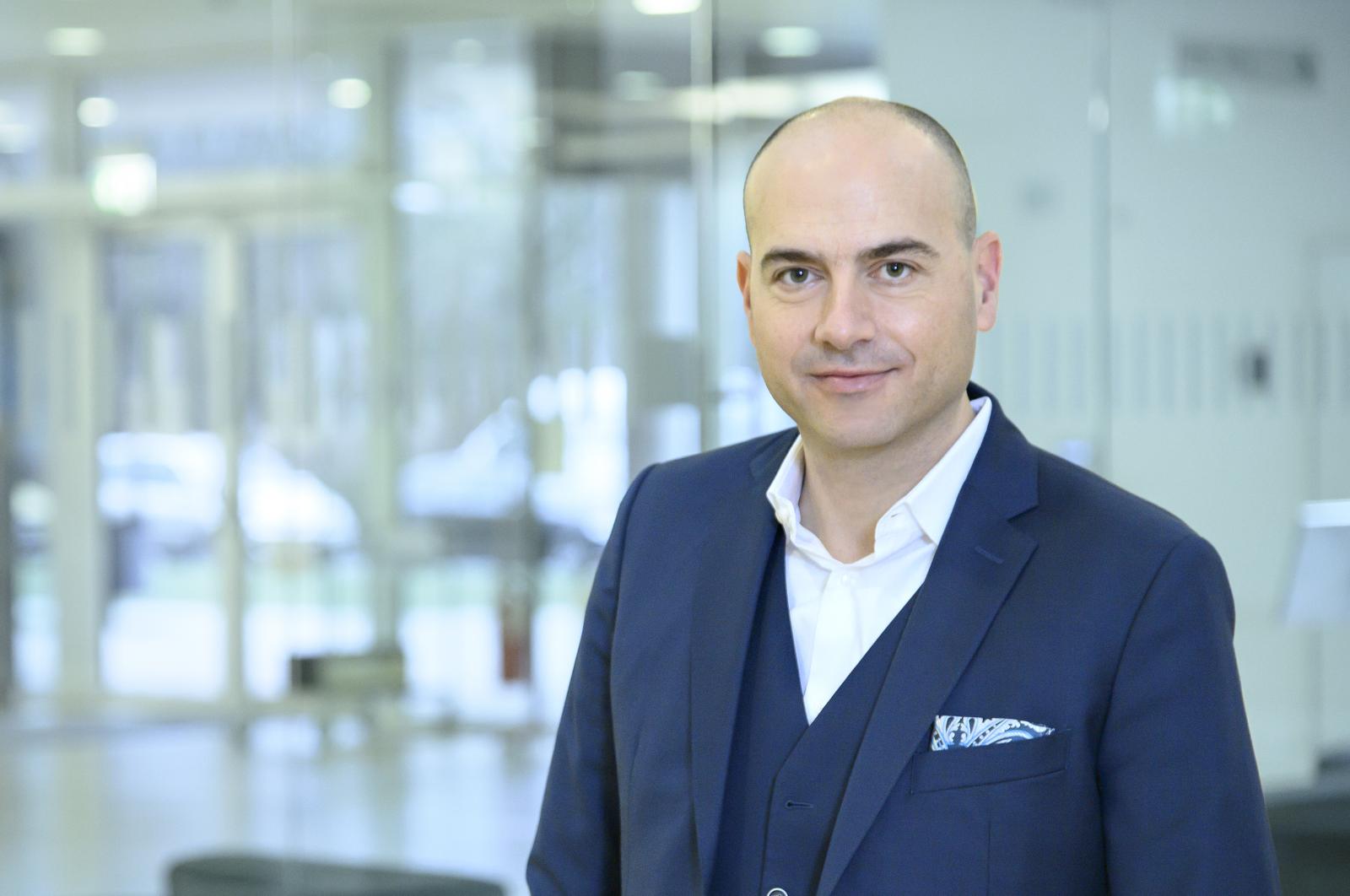
    Prof. Dr. Dr. Thomas Thum has joined Fraunhofer ITEM as institute director

    Research News / January 12, 2021

    Prof. Thomas Thum has joined Fraunhofer ITEM as institute director
    © Fraunhofer ITEM, Ralf Mohr

    On January 1, 2021, Prof. Thomas Thum joined the Fraunhofer Institute for Toxicology and Experimental Medicine ITEM in Hannover as new institute director. He will hence-forth manage the institute together with Prof. Norbert Krug, who has been director of Fraunhofer ITEM for the past four years. In addition, Prof. Thum has accepted the call to a full professorship in “Translational validation of innovative therapeutics” at the nearby Hannover Medical School (MHH), a position that is linked to the Fraunhofer Institute directorship.

    more info
  • BAU 2021 online trade fair: occupational health and safety / 2021

    A flow of fresh air protects against coronavirus

    Press release / January 11, 2021

    A new air lock is intended to protect people who work at counters and supermarket checkouts, who are particularly at risk of contracting COVID-19.
    © iStock

    People who are required to serve a large number of customers at a checkout or counter are at a particularly high risk of exposure to COVID-19. At the Fraunhofer Institute for Building Physics IBP, a type of air lock was therefore developed to shield work stations from the surrounding air using constant ventilation. This “protective canopy” will be unveiled to the public from January 13 to 15, 2021, at the online BAU trade fair.

    more info
  • BAU 2021 online trade fair: MorphoColour and photovoltaic shingles / 2021

    Solar technology with the beauty of butterfly wings

    Press release / January 11, 2021

    The new photovoltaic modules can be manufactured in the desired colour.
    © Fraunhofer ISE

    Photovoltaic and solar thermal systems are not always considered aesthetically enhancing to a building. The coloured modules, however, being developed at the Fraunhofer Institute for Solar Energy Systems ISE are refreshingly challenging this perspective. Inspired by the phenomen that causes the shimmerings shades of blue or green of the wings of the morpho butterfly, the underlying mechanism of spectrally selective reflectance allows the finished modules to be a homogenously uniform colour. Whether you want gorgeous bright tones or more subdued greys it is possible to design the solar module colour to enhance or blend with the building to which the module will be mounted. These colourful modules will be exhibited at the next BAU trade fair.

    more info
  • BAU 2021 online Trade Show: Digital Interior Specifications / 2021

    Digital assistant for building owners

    Press release / January 11, 2021

    The Fraunhofer Institute for Casting, Composite and Processing Technology IGCV’s new facility in Garching was a pilot project designed with digital inte-rior specifications.
    © Architekturbüro HENN

    Estimating the cost of a major construction project is complicated and time-consuming. That is why a Fraunhofer team developed a tool that makes the planning process and cost estimates in particular significantly easier – digital interior specifications, which will be exhibited at the online BAU 2021 trade show from January 13 to 15, 2021. It is especially suited for recording the specifications of complex research facilities that do not come off-the-shelf.

    more info